
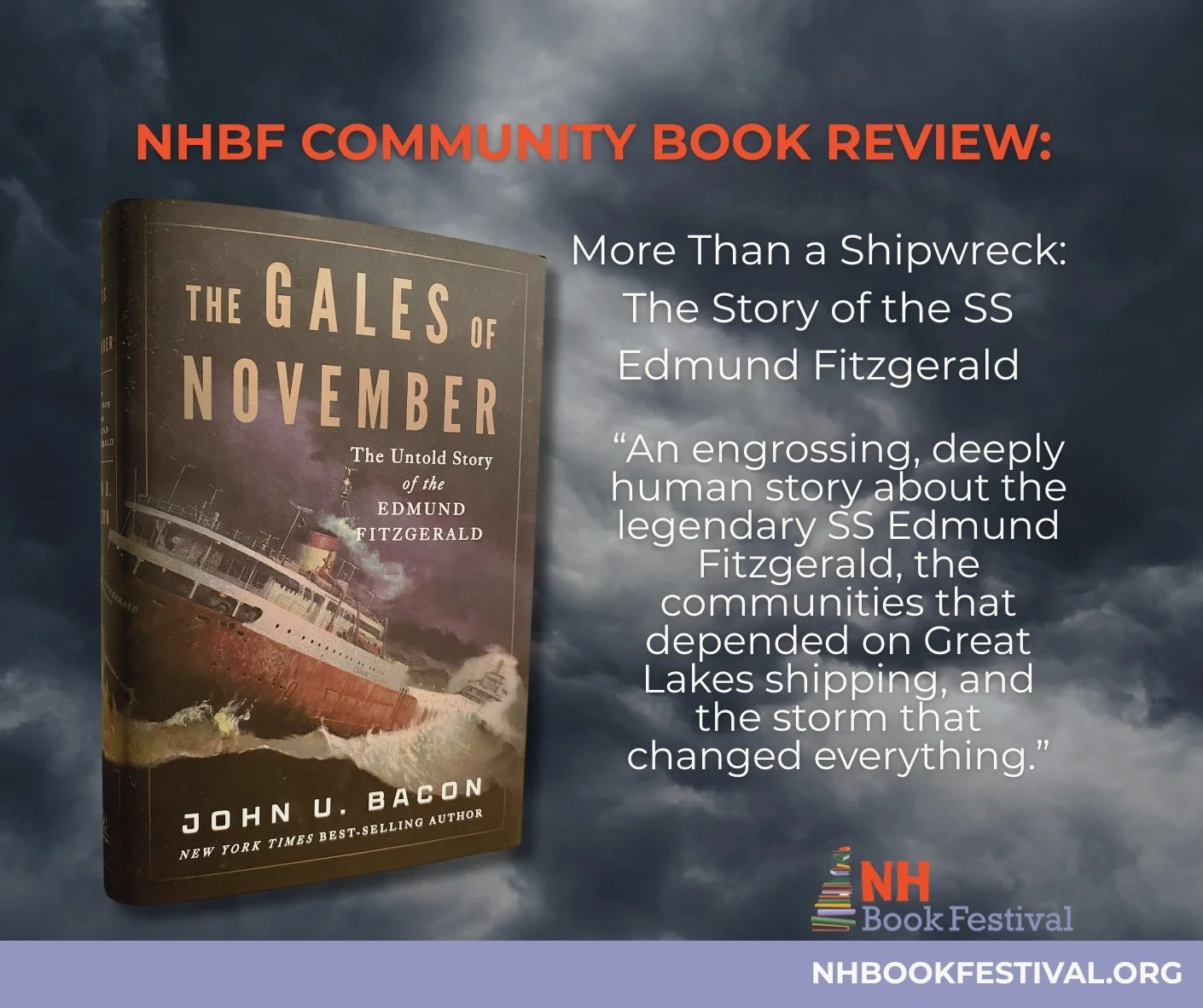
I’ll start with a confession: I am not a ship person. Sure, I went through a Titanic phase as a kid, but beyond that I could probably only name the USS Constitution and call it a day. So when I picked up The Gales of November by John U. Bacon, I wasn’t entirely sure what to expect. What I found was an engrossing, deeply human story about the legendary SS Edmund Fitzgerald, the communities that depended on Great Lakes shipping, and the storm that changed everything.
Here’s why this is a five-star read for me:
1. The language is accessible.
John U. Bacon breaks down maritime jargon in a way that makes you feel educated without ever feeling talked down to. By the end of the book, I felt like I’d taken a masterclass in Great Lakes shipping—while being completely absorbed in the story.
2. The scope is impressive.
Bacon walks you through the entire Great Lakes shipping industry—its economic importance, its risks, and its rewards. At its heart, though, this is a book about humanity. He writes beautifully about the tight-knit communities built around the industry and the cultural dynamics that shape them. The oral histories, stories of storms worse than anything sailors encounter in the open ocean, are harrowing and unforgettable. These are tales of omens, warnings, and hard-earned wisdom, passed down like folklore.
3. The reverence for the ship.
The SS Edmund Fitzgerald was a celebrity on the Great Lakes from the moment she was conceptualized to her tragic end. Bacon captures the pride in her construction, the innovation, and potential shortfalls, behind her design, and the high standards upheld by her captain and crew. Ultimately, the ship is a character all her own—The Pride of the American Side.
4. The careful case-building.
Throughout the book, Bacon methodically builds a case for what may have happened on that fateful night in November 1975. By the time he recounts the final hours, you understand the structural possibilities of the Fitz, the weather conditions, and the human decisions that come together during what’s often described as a “60-year storm.” He gives you space to form your own theory but ensures you grasp just how many factors had to align for such a catastrophe to occur.
5. The compassion.
Bacon clearly took immense care in speaking with the families of the crew. While there are moments that border on hero worship, I ultimately came away convinced that these were seasoned, professional men doing a dangerous job with integrity. The grief of those left behind is handled with respect and dignity, especially Aunt Ruth, who lost her only child in the wreck.
6. I learned more than I ever expected to.
Every few chapters, I found myself summarizing the book to my husband because the storytelling was so compelling, and I was recommending it before I’d even finished it. I now know what a Plimsoll Line is (the line on a freight ship’s hull that indicates the maximum safe loading depth), and I tumbled down a Great Lakes weather rabbit hole. The Gales of November became an obsession.
When I reached the final chapters recounting the night of November 7, I found myself hoping for a different ending—even though I knew better. The accounts of the people on shore who loved the ship and her crew were devastating, and the ways they honored the men were deeply moving.
Even if you don’t typically read nonfiction—and even if you’re not into ships—I cannot recommend this enough. The storytelling is phenomenal, and the tragedy of the Edmund Fitzgerald is worth remembering. Since her sinking in 1975, there have been no other major shipwrecks on the Great Lakes—a sobering testament to the lessons learned from this tragedy.
—Angelica Ladd
